
Yamaha Launches Its First Electric Scooter in India
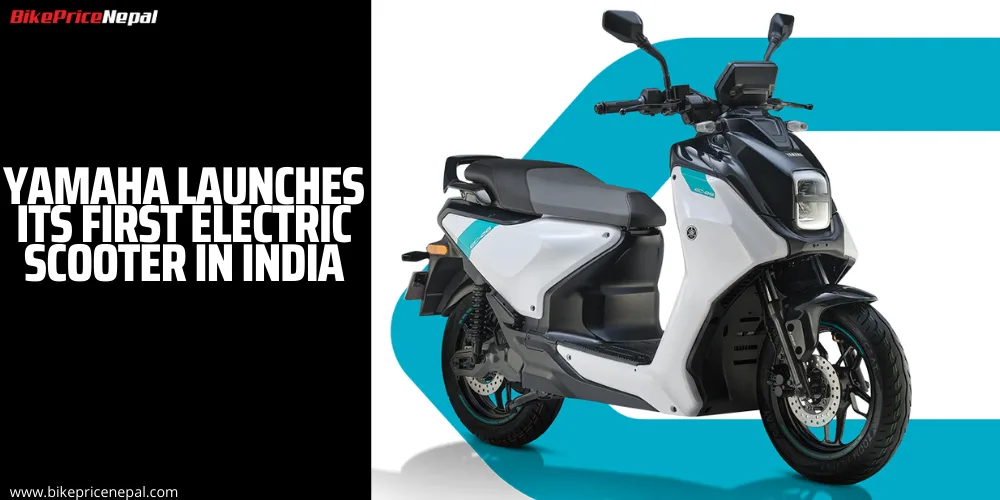
The rumble of a Yamaha two-wheeler has long been synonymous with performance and engineering prowess in India. But in a significant, strategic pivot, the iconic manufacturer has swapped the internal combustion roar for an electric whisper. Yamaha has officially stepped into India’s booming electric two-wheeler space with the launch of the EC-06, a move that signals not just a new product, but a new philosophy for the brand in one of the world's most critical markets.
More Than a Launch: A Calculated Entry
Yamaha's entry is notable for its approach. Instead of a ground-up, solo-developed machine, the EC-06 is born from a collaborative partnership with Bengaluru-based startup River Mobility. The scooter shares its core platform with the River Indie, a model already known for its robust capabilities. This isn't a simple rebadge, however. It’s a strategic move that allowed Yamaha to accelerate its market entry while infusing the product with its distinct design language and brand assurance.
Currently, the EC-06 is making a phased debut, available in select states including Maharashtra, Karnataka, and Tamil Nadu—regions with strong EV infrastructure and consumer appetite.
Design: Sculpting a Yamaha Identity
At first glance, the Yamaha EC-06 carves its own path. While the River Indie embraces a boxy, utilitarian, almost rugged aesthetic, Yamaha’s designers have leaned towards a sharper, more angular, and conventional silhouette. The front apron is sculpted, side panels feature triangular accents, and the upper section is cleanly blacked out, housing a sleek stacked headlamp unit.
Yes, certain cues—like the protruding headlight pod—hint at its shared lineage. But the overall effect is sleeker and more metropolitan. The tail section is cleaner, with simpler lamp designs. It’s a scooter that prioritizes urban style while subtly distancing itself from its sibling’s adventurous posture.
Performance & Powertrain: Familiar Yet Fine-Tuned
Underneath, the mechanicals are largely familiar but promise Yamaha-level tuning. The EC-06 is powered by a 4 kWh battery pack paired with a mid-drive electric motor producing 6.7 kW (approx. 9 bhp) and a healthy 26 Nm of instant torque. Yamaha claims a top speed of 79 kmph, making it viable for city highways, and a certified range of 169 km—a figure that slightly edges out the River Indie’s claimed range.
Charging remains practical and accessible. Using a regular household socket, a 0-80% charge takes about 8 hours, with a full top-up nearing 10 hours. This positions it as an overnight charging solution, ideal for daily commutes.
Features & Practicality: A Trade-Off for Style?
The feature list stays close to its River sibling. Riders get a color LCD instrument console, three riding modes (Eco, Standard, and Power), and a handy reverse assist function. It’s worth noting that the LCD layout mirrors the older River Indie unit, not the newer Gen 2.5 version with its updated interface.
Where the two diverge more tangibly is in practicality. The Indie is renowned for its cavernous 43-liter underseat storage plus a front glovebox. The Yamaha EC-06, in pursuit of its leaner design, offers a 24.5-liter underseat boot and forgoes the front storage entirely, replacing it with just the charging port. This is a conscious trade-off, shedding about 3 kg of weight (kerb weight: 132 kg) for what Yamaha perceives as a more appealing design for its target urban rider.
The Big Picture: A Yamaha Badge, River’s Factory
Perhaps the most telling detail of this launch is the manufacturing tag. Despite wearing the prestigious Yamaha badge, the EC-06 will be manufactured at River Mobility’s facility in Hoskote, Karnataka. This underscores a modern, asset-light, and partnership-driven approach. Yamaha brings its global R&D expertise, vast distribution network, and brand trust, while River contributes its agile EV-specific platform and manufacturing setup.
Conclusion:
The Yamaha EC-06 is more than just an electric scooter. It is a bellwether for the future of the automotive industry—where legacy brands and agile startups collaborate to accelerate innovation. For the Indian consumer, it offers a trusted brand name on a competent EV platform, with a design that leans into urban sophistication over utilitarian ruggedness.
Its success will depend on how the market values the Yamaha brand premium against established electric rivals and its own more practical River sibling. One thing is certain: with Yamaha now officially in the game, the electric two-wheeler race in India just got a lot more interesting.